














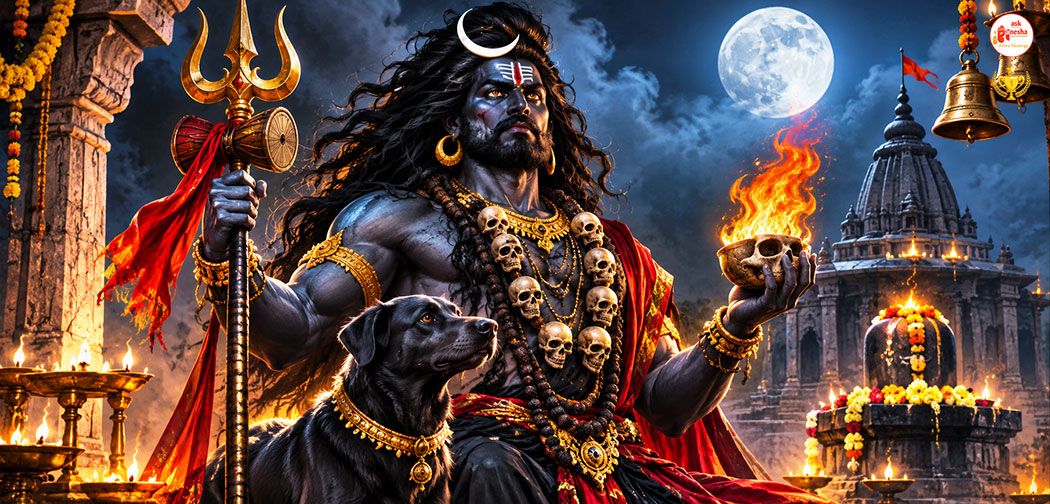
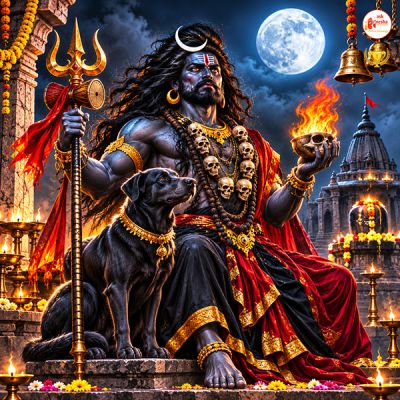
At the entrance of the Kaal Bhairav Temple in Varanasi, a stone dog stands guard. It is a small detail that tells you something about the god that people come to see. The dog is Lord Bhairav’s companion and Bhairav himself is the guardian of Kashi, the old name for Varanasi. Kalbhairav Jayanti 2026 falls on Tuesday, 1 December. On this day, devotees honour the fierce form of Lord Shiva whom people worship to when they feel afraid or need the courage to do what is right.
Kalbhairav Jayanti 2026 Date, Ashtami Tithi and Puja Timings

Ashtami Tithi begins at 12:11 AM and ends at 11:13 PM on Tuesday, 1 December 2026, in Indian Standard Time. The first time is easy to misread. It means eleven minutes after Monday night turns into Tuesday. If you plan to offer prayers on Tuesday evening, the tithi will still be in progress. By midnight on Tuesday night, it will already have ended. The start and end times tell you how long Ashtami lasts. A temple might set its own time for the evening puja, so check its schedule if you hope to join the prayers in person. If you live outside India, look up the festival for your city so you have the date and time where you live. You might also notice that two Hindu calendars give the festival different month names. A calendar that counts the month from one full moon to the next places the Jayanti in Margashirsha. A calendar that counts from one new moon to the next calls the month Kartika. Both point to the eighth lunar day or Ashtami, as the moon grows smaller after the full moon. That also explains why the word Kalashtami appears more than once when you look through a festival calendar. Devotees can worship Bhairav on this lunar day every month. The annual Jayanti marks the day he is believed to have appeared. In December 2026, the distinction matters because there is another Kalashtami on 30 December. For the annual festival, the date to mark is 1 December.
Kaal Bhairav Jayanti Story and Significance
Why do people get protection from a god who looks so fierce? One answer comes from an old story about Lord Brahma, the creator. In one telling, Brahma grew proud of having created the world. Shiva took the form of Bhairav and cut off Brahma’s fifth head. Yet the story gives Bhairav a burden of his own. Brahma’s skull stayed with him as he wandered and he found release only when he reached Kashi. There, Shiva gave him the duty of guarding the city. This is why people still call him the Kotwal of Kashi. A kotwal is an officer charged with keeping a town safe. For someone hearing the story for the first time, that familiar job title helps explain the affection behind the name “Baba Kaal Bhairav.” People come to him as they would come to a guardian who knows their home and those who live there. In the old lanes of Varanasi, visitors can see this belief in small details. A dog keeps watch at the temple door and shops near the shrine sell black threads that devotees wear as a sign of Bhairav’s protection. The story also gives families something to talk about on his Jayanti. Brahma had done something great, yet his pride still led him astray. Bhairav called him to account, then had to carry the weight of his own deed. For a parent telling the story to a child, that last part is worth keeping. Even the guardian of Kashi had to answer for what he had done.
Kalbhairav Jayanti Puja Vidhi at Home

For a simple Kalbhairav Puja at home, start by clearing a place for prayer. Set out a picture of Lord Bhairav if you have one, along with a lamp, a little water and a fresh flower. If your family uses incense, this is the point in the puja to light one of your energized incense sticks. Place it in a holder, light the lamp and offer the flower. A short Bhairav Mantra you can say is Om Kaal Bhairavaya Namah, which means “I bow to Lord Kaal Bhairav.” Say it slowly enough to hear each word. If a child or someone new to the puja is sitting with you, say the line once and let them repeat it with you. You can then speak to Bhairav in your own language. You might ask for courage before a hard conversation or say a few words of thanks for someone who stood by you when you were afraid. Some families also keep a fast or spend part of the night in prayer. Follow the custom you know from home. After the puja, you may wish to offer food to a dog in honour of Bhairav’s animal companion. If your family also likes to feed a cow on holy days, ask a nearby cow shelter what fodder it needs. Children can take part by carrying the bundle or helping fill a water bowl. When they see the dog beside Bhairav in a picture the next morning, they may remember both the story you told and the animal they helped care for.





 Translate