









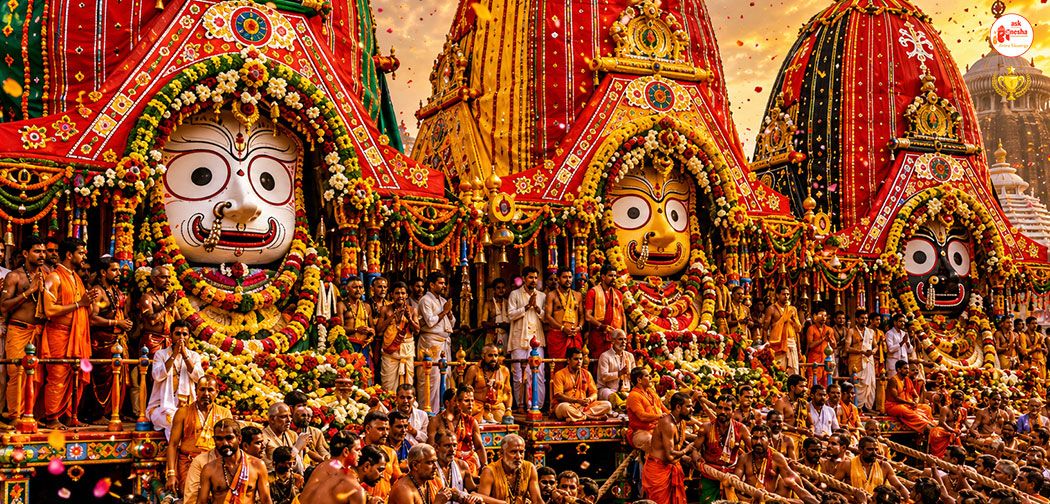
The eastern coast of India covered with serene blue waters is a place called Odisha/Orissa. A land that has to offer temples from Konark to beaches Puri beach, from International Sand Festival to the divine Jaganath Rath Yatra. This Land offers something for everyone. Rath Yatra is perhaps the most famous festival of Orissa. The Jagannath (Lord of Universe) temple is one of the sacred pilgrimages of Hindus. And one of the 4 dhama's of Hindus. Rath Yatra is the ritualistic travel of Lord Shri Krishna. He along with his elder brother Balbhadra or Balram and Younger sister Subhadra traveled to their maternal Aunts house (known as Mausi Badi). It is also known as the Gundicha Temple which is 2 kms away from the main temple. It is held during the month of June and July every year. This year the Jagannath Rath Yatra will be celebrated on 16 July 2026.
Rath Yatra Festival of Jagnanath Puri

In colloquial terms Rath Yatra is Chariot Festival celebrated at Puri which is also called the temple town of Odisha. It is normally celebrated on the 2nd day of Shukla Paksha of the Aashad Maas. The significance of Rath Yatra is a symbolism that states that after a long time of separation of Lord Shri Krishna from Dwarka. He travels from Kuruskshetra to Dwarka so that he would able to spend some time with the inhabitants of this place. Three chariots of different sizes are made for the three deities. It is believed that apart from the deities, the Kalash placed on top, the charioteers, and the horses, everything else is newly made each year.
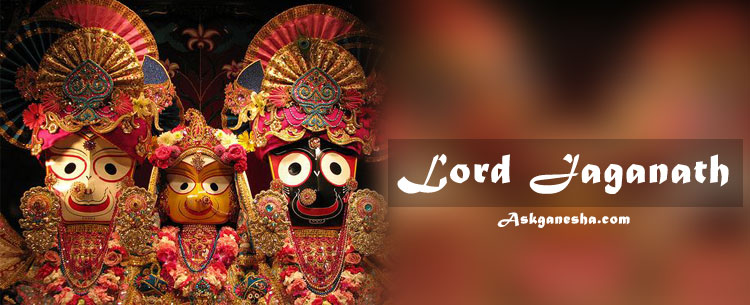
Around thousands of devotees come to the temple to pull the chariot to its destination. The chariot lack steering system. There are side deities who are also seated in each Chariot. For example Sudarshan is seated next to Lady Subhadra; Madan Mohan is seated next to Lord Jagannath. And Idols or Lord Rama and Vishnu are seated next to Balram. The devotees come from all the four corners of the country to witness this nine day festivity.
The Chariots of Rath Yatra
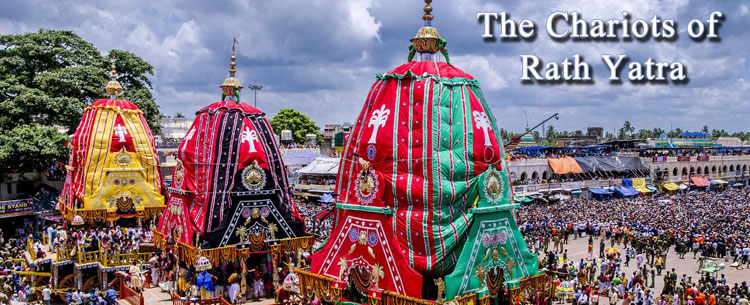
The Chariots have different names and have different colors and themes. And the names of the chariots are:
1) Chariot of Lord Jaganath- Nandighosha also known as Garuddhwaja.
2) The Chariot of Lord Balbhadra- Talatdhwaja
3) Chariot of Lady Subhadra- Padhmadhwaj or Devadalana
Nandighosha or Garuddhawaj:
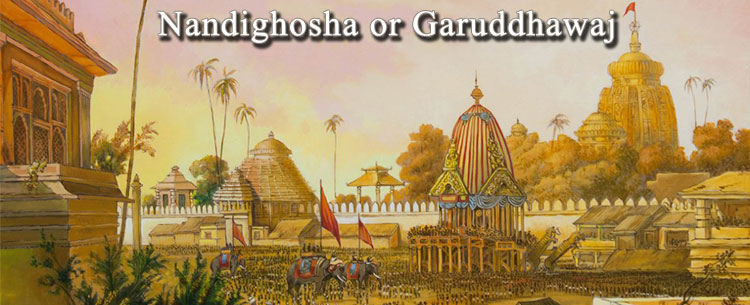
Among the 3 chariots, this is the Largest Chariot that has a yellow and red color canopy, 4 white horses. It is about 45 feet high and has 16 wheels. And it has a flag named Trailokyamohini and its emblem is Sudarshan chakra with Garud as the guardian deity and charioteer as Daruka. The gatekeepers of this chariot are Jay and Vijay. Rope that is used to pull the chariot of Lord Jagannath is called as Shankachuda. The Nandi Mukha is the face of the Chariot and this chariot consist of a total of 9 deities they are: Varaha, Govardhana, Krishna, Narasimha, Ram, Narayan, Trivikarma, Hanuman and Rudra. It also has weapons like Shankha and chakra.
Talatdhwaja:
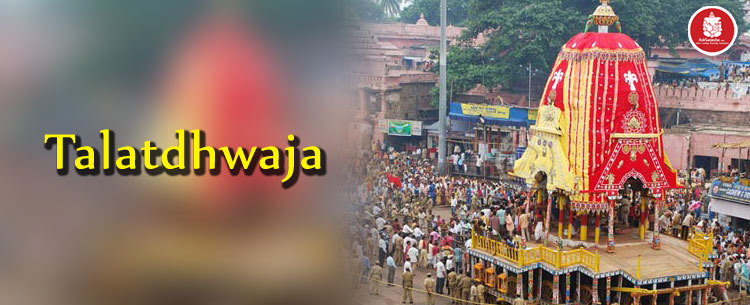
The second number chariot is that of Lord Balbhadra or Balram. This chariot has a green and red color canopy with 4 black horses. It is about 44 feet high and consists of 14 wheels. The flag that is hoisted on this chariot is called Unnani. And the emblem of this chariot is also Sudarshan, the gate keepers of the Chariot is Nanda and Sunanda. The guardian deity of this chariot is Vasudev and the charioteer is Matali. And the rope that is used to pull the chariot of Lord Balram is called Vasuki. The face this chariot is known as Ketu Bhadra and it uses weapons like, Hala and musala. Apart from Lord Balram the other nine deities are: Ganesha, Karthikeya, Sarvamangala, Pralambari, Halayudh, Mritunjaya, Natamvara, Mukteshwar and Sheshadeva.
Padhmadhwaj or Devadalana:
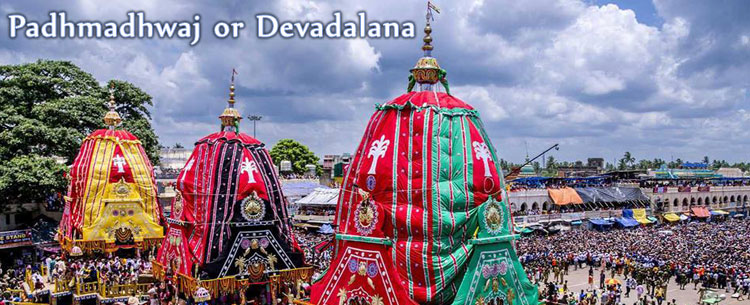
Although, it is easy to identify this chariot; it is the smallest of the three. And it consists of the black and red canopy and is about 43 feet high with 12 wheels and 4 red color horses. The guardian deity of this chariot is Jayadurga and the Charioteer is Arjuna (also her husband). The flag that is hoisted on her chariot is called as Nadambika and the rope used to pull this chariot is called Swarnachuda. The gate keepers of this chariot are Ganga and Jamuna. The face of this chariot is Bhakti Sumedha and the weapons are, Padma and Kalhar. Apart from Subhadra also the 9 other deities that travel in this chariot are: Chandi, Chamunda, Ugratara, Vandurga, Shulidurga, Varahi, Shama Kali, Mangala and Bimla.
Further, Rath Yatra is not just a festival or fanfare. It is rather a way of life for the people of Orissa. Lord Jagannath travels and stays at his Mausi Badi for Nine days. For these nine days festivities goes on and then Lord returns to his place. This is also done with same enthusiasm. On this Rath Yatra day, get your Lord Jagannath Deity pujas performed by our well- versed Purohit based on the Vedic Principle. Book Your Lord Jagannath Puja now on askganesha.com.
History of Jagannath Rath Yatra Festival in India
Jagannath Rath Yatra has a very long and great history that goes back many centuries ago. It is believed that this festival started in ancient times and has been celebrated continuously with great devotion till today. The temple of Lord Jagannath in Puri is one of the most important pilgrimage sites in India and the Rath Yatra is the biggest event for the devotee of Lord Jagannath. Over the time this festival has become famous not only in India but also around the world. Many people from different countries come to witness this grand celebration and experience the spiritual energy of the event.
Why Jagannath Rath Yatra is Famous Worldwide
Jagannath Rath Yatra is one of the most famous festivals in the world because of its grand scale and unique traditions. The huge chariots, the large number of devotees and the powerful atmosphere make it a one-of-a-kind experience. The sight of thousands of people pulling the chariots together creates a strong feeling of devotion and togetherness. This festival has also been celebrated in many countries outside India which has helped to spread its popularity globally.


 Translate